Summary
Fire safety is essential for every building type. The right fire protection system depends on risk assessment, building usage, regulatory compliance, and maintenance planning. Systems such as detection, alarm, sprinkler, hydrant, and specialized suppression solutions work together to ensure safety. Samrudhi Engineers provides end-to-end fire system design, installation, and maintenance services tailored to each client’s needs.
Fire safety is not just a regulatory requirement—it is a responsibility. Whether you own a commercial complex, industrial plant, warehouse, residential building, hospital, or educational institution, installing the right fire protection system can mean the difference between minor damage and catastrophic loss.
At Samrudhi Engineers, we understand that every building has unique fire risks. Choosing the right fire system requires careful planning, compliance awareness, and expert guidance. In this comprehensive guide, we will walk you through everything you need to know about selecting the best fire protection system for your property.
Why Fire Safety Matters More Than Ever
Fires can spread within minutes, causing:
- Loss of life
- Severe property damage
- Operational downtime
- Legal penalties
- Insurance claim complications
Modern buildings are more complex than ever, with electrical systems, HVAC networks, storage materials, and automation systems increasing fire risks. A properly designed fire protection system ensures:
- Early detection
- Immediate
- suppression
- Safe evacuation
- Reduced damage
- Legal compliance
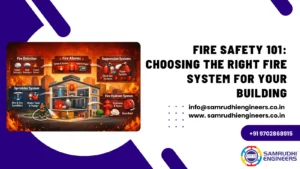
Understanding the Types of Fire Protection Systems
Before choosing a system, you must understand the different categories available.
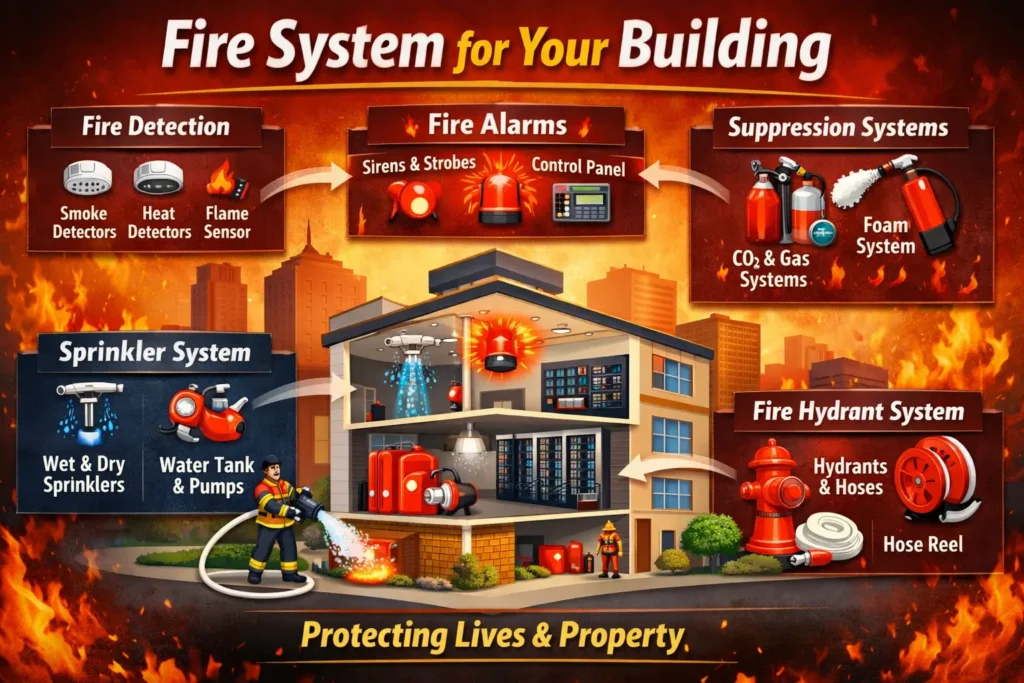
1. Fire Detection Systems
These systems identify fire at the earliest stage.
Includes:
- Smoke detectors
- Heat detectors
- Flame detectors
- Manual call points
- Fire alarm panels
Detection systems alert occupants and activate suppression mechanisms.
Best for: All types of buildings.
2. Fire Alarm Systems
An alarm system provides audible and visual alerts when a fire is detected.
Components include:
- Control panel
- Hooters/sirens
- Strobe lights
- Public address system
This system ensures timely evacuation.
3. Fire Sprinkler Systems
Sprinkler systems automatically release water when high temperatures are detected.
Types of sprinkler systems:
- Wet pipe system
- Dry pipe system
- Pre-action system
- Deluge system
Best for:
- Commercial complexes
- Warehouses
- Manufacturing plants
- IT parks
4. Fire Hydrant Systems
Hydrant systems provide a reliable water supply for firefighting teams.
Includes:
- External hydrants
- Internal landing valves
- Hose reels
- Pump systems
Best for:
- Industrial facilities
- Large commercial properties
- Multi-story buildings
5. Fire Suppression Systems (Specialized Systems)
Used where water is not suitable.
Examples:
- CO₂ systems
- Clean agent systems
- Foam systems
Ideal for:
- Server rooms
- Electrical panels
- Chemical storage areas
- Data centers
Step-by-Step Guide: Choosing the Right Fire System
Selecting the right fire safety system depends on several critical factors.
Step 1: Identify Your Building Type
Different buildings have different fire risks:
| Building Type | Risk Level | Recommended System |
|---|---|---|
| Residential Apartments | Medium | Smoke detectors + sprinkler system |
| Warehouse | High | Hydrant + sprinkler + alarm system |
| Chemical Plant | Very High | Foam suppression + detection system |
| Office Building | Medium | Detection + alarm + sprinklers |
At Samrudhi Engineers, we conduct detailed risk assessments before recommending solutions.
Step 2: Conduct Fire Risk Assessment
A fire risk assessment evaluates:
Electrical installations
Storage materials
Occupancy load
Ventilation system
Fire exit layout
Flammable substances
Professional assessment ensures accurate system selection.
Step 3: Check Compliance Requirements
In India, fire systems must comply with:
National Building Code (NBC)
Local fire authority norms
Insurance requirements
Factory Act guidelines (for industries)
Failure to comply can result in penalties or closure notices.
Samrudhi Engineers ensures full regulatory compliance in every installation.
Step 4: Consider Water Availability
If water supply is limited, a clean agent suppression system may be necessary.
Buildings with large areas require high-capacity fire pumps and storage tanks.
Step 5: Evaluate Maintenance Requirements
Installing a system is not enough. Regular maintenance is essential.
Choose systems that:
Are easy to inspect
Have accessible components
Offer automated monitoring
Samrudhi Engineers provides ongoing operation and maintenance services to ensure your system stays ready 24/7.
Active vs Passive Fire Protection
Understanding the difference helps in designing a complete solution.
Active Fire Protection
These systems act when fire occurs.
Passive Fire Protection
- Fire-resistant walls
- Fire doors
- Compartmentalization
- Fire-rated coatings
These systems slow down fire spread.
For complete protection, both must work together.
Common Mistakes to Avoid
When selecting a fire protection system, avoid these errors:
❌ Choosing the cheapest system without risk assessment
❌ Ignoring compliance norms
❌ Installing only alarms without suppression
❌ Poor maintenance planning
❌ Not training staff
Fire safety is an investment, not an expense.
Why Professional Design Matters
A poorly designed fire system may:
Fail during emergency
Cause water damage
Trigger false alarms
Lead to compliance issues
Professional engineers calculate:
Water pressure requirements
Pump capacity
Coverage area
Detector placement
Alarm load
Samrudhi Engineers combines engineering expertise with advanced technology to design reliable fire protection systems.
Cost vs Value: What Should You Prioritize?
While cost is important, consider long-term value:
Reduced insurance premiums
Lower damage risk
Business continuity
Legal compliance
Brand reputation protection
The right fire system pays for itself during emergencies.
Fire System Installation Process
At Samrudhi Engineers, we follow a structured approach:
Site inspection
Risk assessment
System design
Approval and compliance check
Professional installation
Testing and commissioning
Staff training
Annual maintenance planning
This ensures complete reliability and peace of mind.
How Samrudhi Engineers Helps
With years of engineering expertise, Samrudhi Engineers offers:
- Fire detection systems
- Fire alarm systems
- Hydrant systems
- Sprinkler systems
- Flame and heat detection
- System operation & maintenance
Our goal is simple: Protect lives, property, and productivity.
Conclusion
Choosing the right fire protection system is not a one-size-fits-all decision. It requires understanding your building type, risk level, compliance requirements, and long-term operational needs.
Investing in a professionally designed fire safety system ensures:
Early detection
Rapid suppression
Safe evacuation
Legal compliance
Business continuity
At Samrudhi Engineers, we help you make the right choice—because when it comes to fire safety, there is no room for compromise.
Frequently Asked Questions (FAQ)
A combination of fire detection, alarm, and sprinkler systems is typically essential for commercial buildings.
In many commercial and high-rise buildings, sprinkler systems are mandatory under local fire safety regulations.
A hydrant system is used manually by firefighters, while a sprinkler system activates automatically during high temperatures.
A professional fire risk assessment by experts like Samrudhi Engineers will determine the right solution.