Summary
EMS coils are essential components in many industrial electrical and electromagnetic applications, but factors such as overheating, insulation breakdown, voltage fluctuations, moisture, vibration, incorrect installation, and excessive duty cycles can lead to premature failure. This blog explains the most common EMS coil failures, their warning signs, and practical preventive maintenance measures. It also highlights the importance of correct coil selection, regular inspection, electrical testing, professional rewinding, and timely repairs. With proper maintenance and reliable technical support from Samrudhi Engineers, businesses can improve EMS coil performance, extend service life, and reduce unexpected equipment downtime.
Electromagnetic coils play an important role in a wide range of industrial electrical and automation applications. From electromagnetic brakes and clutches to contactors, solenoid-operated equipment, lifting systems, control mechanisms, and industrial machinery, coils are responsible for converting electrical energy into magnetic force.
EMS coils are designed to operate reliably under demanding industrial conditions. However, like any electrical component, they can experience failures due to overheating, insulation deterioration, moisture, voltage fluctuations, mechanical stress, poor maintenance, incorrect installation, and prolonged operation.
A failed electromagnetic coil can affect the performance of an entire machine or production system. In some cases, a coil failure may cause equipment downtime, increased energy consumption, damage to associated components, and unexpected maintenance costs.
Understanding the common causes of EMS coil failures and taking preventive measures can significantly improve equipment reliability and extend coil service life.
Samrudhi Engineers provides professional solutions for electromagnetic coil requirements, including coil inspection, rewinding, repair, replacement, and technical support for industrial applications. This guide explains the most common EMS coil failures and practical ways to prevent them.
What Is an EMS Coil?
An EMS coil is an electromagnetic coil designed to generate a magnetic field when electrical current passes through its winding. The magnetic field produced by the coil can be used to create movement, attraction, holding force, braking action, switching, or other mechanical operations.
An electromagnetic coil generally consists of:
- Copper or aluminum winding
- Insulation material
- Coil former or bobbin
- Core or magnetic assembly
- Protective covering or housing
- Electrical terminals or leads
The coil’s performance depends on several factors, including winding resistance, number of turns, wire size, insulation quality, operating voltage, operating frequency, ambient temperature, and cooling conditions.
When any of these factors move outside the manufacturer’s specified operating range, the coil can become vulnerable to premature failure.
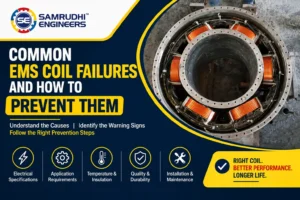
Common EMS Coil Failures
1. Coil Overheating
Overheating is one of the most common causes of electromagnetic coil failure.
Every coil generates a certain amount of heat while carrying electrical current. Under normal conditions, this heat is dissipated through the coil body, surrounding air, housing, or dedicated cooling arrangement.
Problems occur when the generated heat exceeds the coil’s ability to dissipate it.
Common causes of overheating include:
Excessive operating voltage
Continuous operation beyond the rated duty cycle
High ambient temperature
Insufficient ventilation
Incorrect coil resistance
Shorted winding turns
Mechanical overload
Poor heat dissipation
Frequent switching
Excessive temperature can gradually damage the insulation surrounding the winding. Once insulation begins to deteriorate, the probability of short circuits and winding failure increases.
How to Prevent Overheating
Ensure that the EMS coil operates within its specified voltage, current, temperature, and duty-cycle limits. Keep ventilation paths clear and inspect the equipment regularly for dust, dirt, or other obstructions that could restrict cooling.
Where equipment operates continuously or under high-load conditions, temperature monitoring can help identify abnormal heating before it develops into a serious failure.
2. Insulation Breakdown
The insulation surrounding the coil winding prevents electrical contact between adjacent turns and protects the winding from contact with the core or other conductive components.
Over time, insulation can deteriorate due to:
- Excessive heat
- Moisture
- Chemical exposure
- Mechanical vibration
- Ageing
- Electrical surges
- Poor-quality insulation materials
When insulation becomes damaged, adjacent winding turns may come into contact with each other. This can result in a shorted turn or partial winding short.
Insulation breakdown can also create leakage current and reduce the electrical safety of the equipment.
How to Prevent Insulation Failure
Use insulation materials appropriate for the operating temperature and industrial environment. Keep coils protected from moisture, oil, corrosive chemicals, and unnecessary mechanical stress.
During preventive maintenance, technicians should inspect visible insulation damage and perform appropriate electrical tests, such as insulation resistance testing, where applicable.
3. Short Circuit Between Winding Turns
A turn-to-turn short circuit occurs when insulation between individual winding turns fails.
This type of failure can be particularly difficult to identify during the early stages because the coil may continue to operate initially.
However, a shorted turn changes the electrical characteristics of the winding and can increase localized heating. The additional heat may then cause further insulation deterioration, resulting in progressive coil damage.
Typical symptoms may include:
- Excessive coil temperature
- Increased current consumption
- Reduced magnetic force
- Unusual burning smell
- Discoloration of the winding
- Repeated fuse or protection trips
Prevention
Maintaining correct operating voltage and temperature is essential. Regular inspection can also help identify discoloration, overheating, or other early signs of winding deterioration.
If a coil shows abnormal resistance or current characteristics, it should be inspected by a qualified technician rather than continuing to operate it under load.
4. Open Coil Winding
An open winding occurs when electrical continuity through the coil is interrupted.
This can happen because of:
- Broken winding wire
- Damaged terminal connection
- Loose electrical connection
- Mechanical damage
- Excessive thermal stress
- Corrosion
- Poor-quality previous repair work
An open coil cannot generate the required magnetic field because current cannot flow through the winding.
How to Prevent Open-Winding Failures
Electrical terminals should be inspected periodically for looseness, corrosion, or overheating. Connections should be properly tightened and protected against vibration.
During maintenance, technicians can measure coil resistance to identify significant changes from the expected value.
If the winding is damaged, professional rewinding or coil replacement may be required.
5. Voltage Fluctuations and Electrical Surges
EMS coils are designed to operate within specific electrical parameters. Voltage that is consistently higher or lower than the rated value can affect coil performance and service life.
Excessive voltage can cause increased current and heating. Repeated electrical surges can also stress insulation and winding components.
On the other hand, insufficient voltage may prevent the coil from producing the required magnetic force, depending on the application.
Industrial electrical systems can experience voltage fluctuations because of:
- Large motors starting or stopping
- Unstable power supply
- Switching operations
- Electrical faults
- Poor power-quality conditions
- Improper control circuits
Preventive Measures
Check the supply voltage regularly and make sure the coil is connected to the correct rated supply.
Where appropriate, suitable electrical protection and control equipment can help reduce the effects of electrical disturbances.
6. Moisture and Water Damage
Moisture is a major threat to electrical coils.
Water or humidity can penetrate insulation and cause corrosion, leakage current, insulation deterioration, and eventual winding failure.
This problem is especially important in industrial environments where equipment may be exposed to:
- High humidity
- Water spray
- Outdoor conditions
- Cooling systems
- Steam
- Condensation
- Washing or cleaning operations
How to Prevent Moisture-Related Failures
EMS coils should be protected from direct water exposure wherever possible. Appropriate enclosures and sealing methods should be used according to the equipment manufacturer’s requirements.
In humid environments, regular inspection is important. Any evidence of moisture, corrosion, or damaged protective covering should be addressed promptly.
7. Mechanical Vibration and Physical Damage
Industrial machinery often operates under significant vibration. Continuous vibration can place mechanical stress on coil windings, terminals, insulation, and mounting components.
Over time, excessive vibration may result in:
- Loose connections
- Broken wires
- Damaged insulation
- Winding movement
- Cracks in coil components
- Abnormal noise
- Reduced coil performance
Mechanical impact during installation or maintenance can also damage a coil.
Prevention
Make sure the coil is properly installed and securely mounted. Avoid applying excessive force to the winding or terminals during installation.
If abnormal vibration is present, the underlying machinery should also be inspected. A coil failure may sometimes be a symptom of a larger mechanical problem.
8. Incorrect Coil Installation
Installing the wrong coil or incorrectly installing the correct coil can significantly reduce service life.
Common installation mistakes include:
- Incorrect voltage rating
- Incorrect frequency
- Wrong coil dimensions
- Improper mounting
- Incorrect terminal connection
- Insufficient cooling clearance
- Improper positioning
- Using an unsuitable replacement coil
A coil may appear physically compatible while having different electrical characteristics.
How to Prevent Installation Problems
Always verify the coil’s technical specifications before installation.
Important parameters may include:
- Rated voltage
- Rated frequency
- Resistance
- Power consumption
- Duty cycle
- Coil dimensions
- Operating temperature
- Mounting arrangement
- Terminal configuration
Using the correct specification is essential for reliable operation.
9. Excessive Duty Cycle
Every electromagnetic coil has a specific operating duty.
Some coils are designed for intermittent operation, while others are designed for continuous operation.
Using an intermittent-duty coil continuously can generate excessive heat and accelerate insulation deterioration.
For example, a coil designed to operate for short periods may not be suitable for applications requiring continuous energization.
Prevention
Understand the application’s operating cycle before selecting or replacing an EMS coil.
The duty cycle should be considered during both the original equipment design and replacement process.
If operating conditions have changed since the original coil was installed, the coil specification should be reassessed.
10. Poor-Quality Rewinding or Repairs
A coil that has failed does not always need to be replaced completely. Depending on its condition and application, professional rewinding or repair may be possible.
However, poor-quality rewinding can result in repeated failures.
Common issues associated with improper rewinding include:
- Incorrect number of turns
- Incorrect wire diameter
- Poor insulation
- Incorrect winding arrangement
- Loose winding
- Inadequate varnishing
- Poor terminal connections
- Improper curing
- Insufficient testing
These problems can change the electrical and magnetic characteristics of the coil.
Choosing Professional Coil Repair
When a coil requires rewinding, the original specifications should be carefully assessed. The replacement winding should be manufactured according to the required electrical and mechanical parameters.
Testing after rewinding is equally important.
Professional coil repair can help restore equipment performance while potentially reducing the cost and downtime associated with complete component replacement.
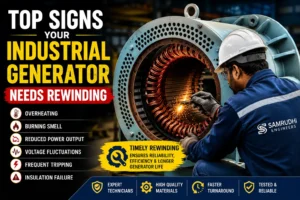
Warning Signs of an EMS Coil Failure
Recognizing early warning signs can prevent unexpected equipment downtime.
Some common indicators include:
Excessive Temperature
If a coil becomes significantly hotter than normal during operation, the cause should be investigated.
Burning Smell
A burnt insulation smell can indicate overheating or insulation deterioration.
Discoloration
Darkened, burnt, or visibly discolored winding material can indicate excessive heat.
Reduced Magnetic Force
A weak magnetic response may indicate winding problems, incorrect voltage, or magnetic circuit issues.
Unusual Noise
Buzzing, vibration, or unusual operating sounds may indicate mechanical or electrical problems.
Frequent Electrical Trips
Repeated fuse, breaker, or protection trips should not be ignored.
Increased Current Consumption
Unexpected changes in current can indicate a winding or electrical supply problem.
Preventive Maintenance for EMS Coils
Preventive maintenance is one of the most effective ways to reduce unexpected coil failures.
A maintenance program should include regular inspection of:
- Coil temperature
- Electrical connections
- Winding condition
- Insulation
- Terminals
- Mounting arrangement
- Moisture exposure
- Ventilation
- Operating voltage
- Current consumption
- Mechanical vibration
Depending on the application, electrical tests can also be performed to identify developing problems.
Maintenance records should be maintained so that changes in coil performance can be identified over time.
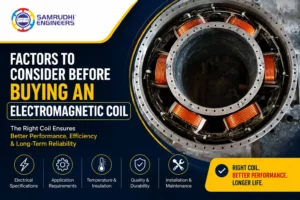
Importance of Correct EMS Coil Selection
Selecting an EMS coil only based on physical dimensions can lead to premature failure.
The replacement coil should match the required technical specifications.
Important factors include:
Voltage: The coil should be suitable for the equipment’s supply voltage.
Frequency: AC coils must be compatible with the operating frequency.
Resistance: The winding resistance should correspond to the intended application.
Duty Cycle: The coil must be suitable for the required operating duration.
Temperature Rating: The insulation system should tolerate the expected operating temperature.
Physical Dimensions: The coil must fit correctly within the equipment.
Magnetic Characteristics: The coil should provide the required magnetic performance.
Environmental Conditions: The coil should be appropriate for humidity, dust, temperature, and other environmental conditions.
Correct selection helps improve reliability and reduces the possibility of repeated failures.
How Samrudhi Engineers Can Help
Samrudhi Engineers provides solutions for industrial electromagnetic coil requirements, helping customers address coil-related problems and maintain reliable equipment performance.
Our approach can include inspection of the existing coil, identification of failure symptoms, assessment of winding condition, and recommendations for repair, rewinding, or replacement based on the application.
Professional support can be particularly valuable when a coil is:
- Overheating repeatedly
- Showing insulation damage
- Experiencing winding failure
- Producing insufficient magnetic force
- Showing abnormal resistance
- Requiring rewinding
- Damaged due to prolonged operation
- Difficult to source as an original replacement
A proper technical assessment can help determine whether repair, rewinding, or replacement is the most appropriate solution.
10 Practical Tips to Extend EMS Coil Life
Following a few basic practices can significantly improve coil reliability:
- Operate the coil at its specified voltage.
- Avoid exceeding the recommended duty cycle.
- Keep ventilation and cooling paths clean.
- Protect the coil from moisture and corrosive substances.
- Inspect electrical terminals regularly.
- Monitor unusual temperature increases.
- Check for excessive mechanical vibration.
- Use the correct replacement coil specification.
- Get damaged coils professionally inspected and rewound.
- Maintain preventive maintenance records.
These simple measures can help reduce premature failures and extend the operational life of electromagnetic equipment.
Conclusion
EMS coils are relatively compact components, but their performance can have a significant impact on the reliability of industrial machinery. Failures caused by overheating, insulation breakdown, short circuits, open windings, voltage fluctuations, moisture, vibration, incorrect installation, excessive duty cycles, and poor-quality repairs can result in equipment downtime and unnecessary maintenance costs.
The key to preventing these failures is a combination of correct coil selection, proper installation, suitable operating conditions, regular inspection, preventive maintenance, and professional repair when required.
When an EMS coil shows signs of failure, continuing to operate the equipment without identifying the underlying problem may lead to further damage. Early inspection can help identify the cause and determine whether the coil can be repaired, rewound, or needs to be replaced.
Samrudhi Engineers supports industrial customers with electromagnetic coil solutions and technical services designed to help maintain dependable equipment performance. With proper maintenance and professional attention, EMS coils can deliver reliable service for longer periods and help reduce unexpected industrial downtime.
If your industrial equipment is experiencing EMS coil overheating, winding failure, insulation problems, reduced magnetic performance, or repeated coil breakdowns, a professional inspection can help identify the root cause and determine the appropriate solution.